


5-Cyanoindole is an important organic compound widely used in the research of bioactive molecules in the field of medicine. Below we will introduce several synthetic methods of 5-Cyanoindole.
5-Cyanoindole:
1. Bergman reaction method:
The reaction of the method is to use alkynes as raw materials to generate aromatic ring compounds through dehydrogenation reaction. 5-Cyanoindole can be synthesized in this way. The raw materials used in the reaction are diethyl terephthalate and 2-phenylacetylene. After the above two compounds are irradiated by ultraviolet light, intermediates are formed, and finally 5-Cyanoindole is generated through a cyclization reaction. The advantage of this method is that the reaction conditions are relatively mild and the synthesis efficiency is high, but the raw materials are expensive and the cost is high.
Step 1: Preparation of 5-cyanindole and silver trifluoroacetate:
Under laboratory conditions, {{0}}cyanindole and silver trifluoroacetate are mixed, usually on the order of 0.1 mmol. Slowly add dimethyl sulfoxide (DMSO) solution in a rotary evaporator and stir to mix, keep warming to 60 degree until all substrates are dissolved. Two times more silver trifluoroacetate was added than the substrate.
Step 2: Reflux reaction:
The reaction mixture was heated for 1 h and refluxed to keep the temperature stable at 60 degree .
Step 3: Hydrolysis:
After the reaction, the mixed solution was cooled to room temperature, and an appropriate amount of water was slowly added for mixing, and the product was extracted with a corresponding solution (such as acetone). In this process, due to the polarity of the double bond characteristic in the 5-cyanindole skeleton, the extraction of the product becomes more troublesome.
Step 4: Concentrate:

Mechanism 1: Prominent hydrogen/oxygen oxidation reaction:
The mechanism of the Bergman reaction involves a hydrogen/oxygen oxidation reaction, and it is difficult to set up a carbon-carbon reaction in this intramolecular mode. Among them, the subtractive state of carbon-hydrogen in 5-cyanindole makes it more general and easy to react for cyclization reactions. In this reaction, nuclear magnetic resonance (NMR) information confirmed the oxidative conversion of the N-cyanonitrogen in 5-cyanindole to the N-subvalent nitrogen atom (o-N≡C). The generated nitrogen oxides (o-N≡C) can be reduced to the corresponding carboxylic acids and amines by other homogeneous and heterogeneous reagents. In this process, heterogeneous chemical catalyst (Acid/base) also plays an important role.
Mechanism 2: Prominent hydrogen/nitrogen oxidation reaction:
The Bergman reaction can also be explained by the hydrogen/nitrogen oxidation reaction. In this reaction, the reduced state of the carbon-hydrogen in 5-cyanindole also reacts well. N-cyano nitrogen can oxidize adjacent carbon-hydrogen bonds. These oxidized intermediates are developed by other reactions (such as hydrogen oxidation, nitration, etc.). The reaction of Mo(CO)6 on Cp2Fe and the produced nitrogen oxide intermediates may also provide a stronger reducing agent. The corresponding electron transfer reactions can play an important role.
2. Suzuki coupling reaction method:
The Suzuki coupling reaction method is a widely used important reaction, which can be used to construct the skeleton of aromatic ring compounds. 5-Cyanoindole can also be synthesized by this reaction. The advantage of this method is that the raw materials are relatively cheap and the reaction conditions are easy to control, but an organic solvent is required.
(1) First, materials need to be prepared, including 5-Bromoindole, 5-Cyano-1,3-dimethylpyrimidine-2,4-dione, Palladium acetate (Pd(OAc)2), Phosphine ligands (such as Phosphine or Phosphite), alkali (such as sodium benzoate or sodium carbonate), Organic solvents (such as dimethyl sulfoxide chloride, acetonitrile, or dichloromethane) and water.
(2) Dissolve 5-Bromoindole, 5-Cyano-1,3-dimethylpyrimidine-2,4-dione and Phosphine ligands in an organic solvent such as dimethyl sulfoxide chloride, acetonitrile or dichloromethane, and Add alkali under cryogenic conditions. For example, dissolve 5-Bromoindole (0.5mmol), {{10}}Cyano-1,3-dimethylpyrimidine-2,4-dione (0.6mmol), Phosphine ligands (such as TRIPHOS, {{20}}.9mol percent ) and sodium carbonate (2.0eq) in CH3CN, stirred until completely dissolved, then added sodium carbonate (2.0 eq) at -78 degree .
(3) Add Palladium acetate (Pd(OAc)2) into the reaction system and stir to mix. For example, add Palladium acetate (1.0 mol percent ) to the above mixture and stir the reaction at -78 degree .
(4) The reaction mixture will be heated to room temperature or 70 degree under a temperature controller, and reacted for 1-2 hours. After the reaction is finished, the reaction mixture is filtered, and the reaction mixture is separated and extracted with water and an organic solvent.
(5) Extract and purify the target product 5-Cyanoindole from inorganic salts and other impurities by column chromatography or other separation techniques. For example, by using silica gel column chromatography, the target product is extracted from the impurities in the column chromatography, and characterized by means such as NMR.
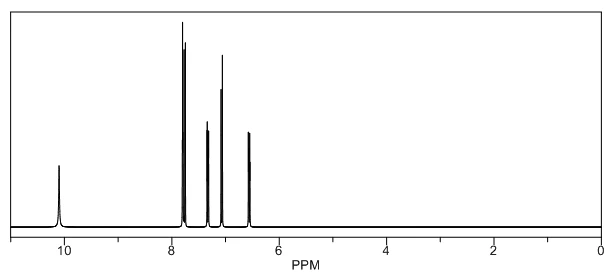
In conclusion, the steps for the synthesis of 5-Cyanoindole by Suzuki coupling reaction are very simple, but attention should be paid to the selection of reaction conditions and materials.
3. Friedel-Crafts reaction method:
The Friedel-Crafts reaction (Fujiwara-Moritani reaction) is an organic synthesis method for the synthesis of aromatics through the exchange reaction of imines and aryl sulfides. It is a cyclization reaction that links an imidazole or pyrrole ring with an aldehyde or ketone ring to generate an aromatic amine containing a heterocycle. 5-Cyanoindole is an amide compound with a nitrogen heterocycle, which can be synthesized by Friedel-Crafts reaction. The advantage of this method is that the chemical properties of the raw materials are relatively stable, and the structure of the resulting product is relatively stable. However, it is necessary to pay attention to the selection of reaction conditions during operation.
The detailed steps of the Friedel-Crafts reaction method are as follows:
(1.) Reactant preparation: Add 5-Cyanoindole and organic solvent containing formaldehyde into a clean and dry three-necked flask. Wherein, the organic solvent can be anhydrous organic solvents such as nitriles, ethers, esters, etc., but care should be taken to select the polarity of the solvent and the compatibility of the reactants.
(2.) Heating reaction: Put the three-necked bottle in a hot oil bath, first heat the reactant mixture with low temperature, and then gradually heat it to the reaction temperature. The reaction time is generally 15-60 minutes. The optimum reaction temperature for this reaction is generally between 100-140 degree , which can be adjusted for different reactants.
(3.) Separation of reaction products: After the reaction is completed, cool the reaction mixture to room temperature, add a large amount of water and organic paint, and then adjust the pH to neutral with acid or hydrochloric acid aqueous solution. The organic phase and the aqueous phase were separated, and the organic phase was dried over anhydrous sodium sulfate and then concentrated to dryness. The product can be separated and purified by means of column chromatography and the like.
In summary, the Friedel-Crafts reaction is an important synthetic method, which is suitable for the synthesis of aromatic amines from heterocyclic compounds. For compounds with nitrogen heterocyclic amides such as 5-Cyanoindole, this reaction has strong applicability and can realize cyclization synthesis, which has certain application value for research in this field.

4. Linearization reaction method:
The linearization reaction method is a method for converting nucleic acid molecules into linearized DNA or RNA, in which 5-Cyanoindole is a commonly used reaction reagent. The raw materials used in the reaction are benzyl alcohol and sodium cyanohydroxide, and 5-Cyanoindole is further synthesized by a cyclization reaction. The advantage of this method is that the raw materials are easy to obtain and the cost is low, and it is suitable for various nucleic acid analysis and research fields. However, it is necessary to pay close attention to the cyclization conditions during the use process to see whether cyclic products can be generated.
The linearization reaction method of 5-Cyanoindole and its detailed steps.
(1) Add the target DNA or RNA to the buffer containing 5-Cyanoindole, usually using Tris buffer with pH 8.5. 5-Cyanoindole is a strong photochemical cross-linking reagent, which can form a complex with N-C binding with nucleic acid bases, resulting in cross-linking between nucleic acid strands.
(2) Expose the reaction mixture to 365 nm ultraviolet light, and through the action of ultraviolet light, 5-Cyanoindole forms a covalent link with the base in DNA or RNA, thereby achieving linearization.
(3) Add gel loading buffer, charge the reaction product and run it into the agarose gel for electrophoresis separation. Because linearized DNA or RNA produces a single band in the gel, it is possible to separate linear fragments of DNA or RNA by electrophoretic separation.
In general, the above methods are all used to synthesize 5-Cyanoindole, and they have their own advantages and disadvantages. In practical application, it is necessary to select the most suitable method according to the actual required product.